
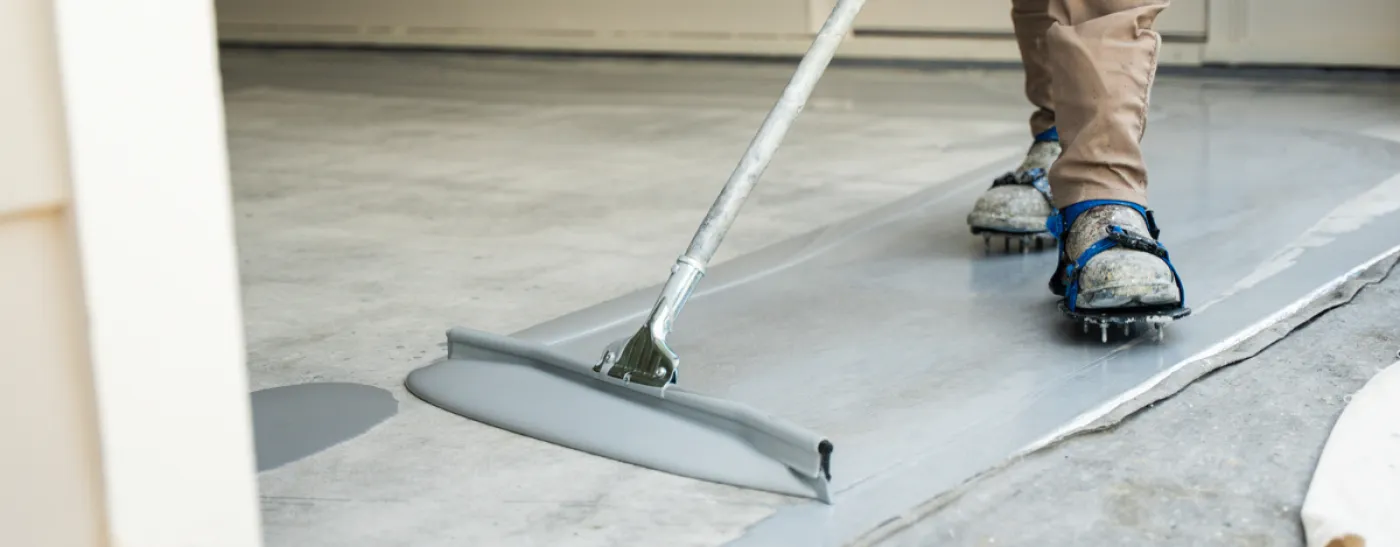
Is Your Epoxy Garage Floor Warranty Actually Worth the Paper It's Written On?
An epoxy garage floor warranty is only as good as the company standing behind it. Here's what most homeowners need to know at a glance:
What to Know |
Quick Answer |
What's typically covered |
Peeling, delamination, adhesion failure, hot tire pickup |
Common exclusions |
Concrete cracking, moisture vapor, chemical spills, normal wear |
Residential warranty length |
Ranges from 5 years to lifetime depending on system and installer |
Commercial warranty length |
1-2 years |
What voids coverage |
Moisture over 7-8 lbs MVE, improper maintenance, chemical damage |
Biggest warning sign |
Company goes out of business before you can file a claim |
You just paid good money for a beautiful garage floor. The installer handed you a warranty — maybe it says "lifetime," maybe 15 years. It sounds solid. But here's the uncomfortable truth: most garage floor coating companies don't survive long enough to honor it.
Industry data shows the majority of garage floor coating companies close within 1 to 3 years of opening. That means a flashy lifetime warranty can become worthless faster than your floor ever would.
And even when a company does stay open, the fine print in most epoxy warranties is packed with exclusions — moisture vapor, concrete movement, chemical spills — that can make coverage nearly impossible to claim.
This guide breaks down exactly what epoxy floor warranties cover, what they don't, and why our professional 2-day installation process is the key to a bond that lasts.

Understanding the epoxy garage floor warranty
When we talk about a professional epoxy garage floor warranty, we are generally looking at protection against three major issues: adhesion failure, material defects, and "hot tire pickup." Adhesion failure is the technical term for the coating simply letting go of the concrete. Delamination is a specific type of failure where the layers of the coating system separate from one another or the base.
One of the most common frustrations for homeowners with lower-quality systems is hot tire pickup. This happens when hot tires from a recently driven car park on the floor; as the tires cool, they literally shrink and grab the coating, pulling it off the concrete when you drive away. A robust warranty from a reputable installer should explicitly cover this.
At Granite Garage Floors, we believe a warranty should be a reflection of the science behind the installation. Our Granite Garage Floors Warranty Standards are built on a foundation of industrial-grade epoxy and polyaspartic technology, anchored by our professional 2-day installation process. We don't just promise a pretty floor; we promise a bond that lasts. This bond is achieved because our 2-day process allows the epoxy primer to properly penetrate the concrete. This includes coverage for both the materials and the labor required to fix a qualifying defect. After all, a "materials only" warranty isn't much help if you have to pay thousands in labor to have the old floor ground off and redone.
Common Exclusions in an epoxy garage floor warranty
It is vital to read the fine print. Even the most comprehensive epoxy garage floor warranty will have limitations. The most common exclusion is concrete cracking. It's important to remember that epoxy is a coating, not a structural reinforcement. If the earth shifts or the concrete slab settles and cracks, the epoxy on top will likely crack with it. This is considered "substrate movement" and is almost never covered.
Other exclusions typically include "acts of God" (floods, fires), battery acid spills (which are highly corrosive), and hydrostatic pressure issues. To help you visualize the differences, here is how residential and commercial terms often differ:
Feature |
Residential Warranty |
Commercial Warranty |
Typical Duration |
Lifetime or 10-15 Years |
1-2 Years |
Daily Traffic Volume |
Low (2-4 vehicles) |
High (Constant machinery/foot traffic) |
Chemical Exposure |
Incidental (Oil, Coolant) |
Frequent (Solvents, Industrial fluids) |
Transferability |
Often restricted to original owner |
Rarely transferable |
How Moisture Affects Epoxy Adhesion
Moisture is the "silent killer" of garage floor coatings. All concrete is porous, meaning it acts like a sponge. Moisture vapor transmission (MVT) occurs when water under the slab evaporates and moves upward through the concrete. If that vapor hits a non-breathable epoxy coating and can't escape, it builds pressure. This can lead to osmotic blistering—those ugly bubbles you might see in a failing floor.
Most warranties have a strict limit on moisture, often voiding coverage if MVE levels exceed 7 to 8 lbs per 1,000 square feet over 24 hours (measured via a calcium chloride test). This is why professional moisture testing is a non-negotiable part of our process. If a contractor doesn't test your concrete for moisture before starting, their epoxy garage floor warranty might be void before the first drop of resin even hits the floor.
Common Epoxy Exclusions and Technical Limitations
Beyond moisture and cracking, technical limitations often revolve around how the floor is used. While epoxy is incredibly tough, it is not indestructible. Dragging a heavy metal refrigerator across the floor or dropping a 50-lb dumbbell can cause "physical impact" damage. While we design our floors to be industrial-grade, most warranties exclude damage caused by neglect or clear abuse.
Chemical resistance is another area of nuance. Most high-quality epoxy systems are resistant to oil, gasoline, and transmission fluid. However, if these chemicals are left to sit for days or weeks, they can eventually "umber" or stain the finish. To keep your warranty valid, most companies require spills to be wiped up within a reasonable timeframe—usually 20 to 30 minutes for harsh chemicals.
We solve many of the traditional "yellowing" issues seen in older epoxy floors by using polyaspartic topcoats. Traditional epoxy can amber when exposed to the UV rays that hit the front of your garage when the door is open. By utilizing a polyaspartic topcoat, we provide UV stability that keeps the floor looking new for decades. You can find more info about our 2-day epoxy process and how we combine these materials for maximum durability.
Comparing Epoxy and Polyaspartic Warranty Durability
It is a common misconception that epoxy and polyaspartic are competing products. In a high-end system, they work in tandem as partners. The epoxy serves as the primary "hero" of the system, acting as a thick, penetrating primer that bites deep into the concrete to create a permanent bond. The polyaspartic is strictly a topcoat and not a standalone product; it acts as the "shield," providing the abrasion resistance and chemical protection.
A system that uses polyaspartic strictly as a topcoat over a thick epoxy base typically offers a 20-year or lifetime lifespan. Polyaspartic is roughly four times stronger than standard epoxy and won't yellow over time. This combination is what allows us to offer a warranty that actually means something—because the system is engineered to withstand the chemicals, hot tires, and UV exposure that cause lesser floors to fail.
Why Company Longevity is the Real Epoxy Warranty
Here is a "pro tip" from the industry: A 50-year warranty from a company that has been in business for 6 months is statistically likely to be worthless. As we mentioned, the 1-3 year failure rate for new coating businesses is staggering. These companies often lack the technical expertise to handle difficult concrete or the financial backing to honor a claim five years down the road.
When you look at an epoxy garage floor warranty, ask yourself: "Will this company be here in 2026 and beyond?" Granite Garage Floors has established a massive footprint across the Metro Atlanta Area—because we focus on a 2-day installation process that prioritizes quality over speed. We use moisture mitigation techniques that 1-day installers simply can't match, ensuring that our "Lifetime Satisfaction Warranty" is backed by decades of proven success.
The Risks of 1-Day Epoxy Systems
Many companies today market "1-day" systems. While the speed is tempting, it often comes at the cost of the warranty. These systems typically use quick-cure polyurea or polyaspartic as the primer. Because these materials dry so fast, they often fail to penetrate deeply into the concrete pores. They "sit" on top of the slab rather than becoming part of it.
In humid climates like Georgia, this is a recipe for disaster. Moisture vapor pressure eventually pushes that thin, quick-cure coating off the surface. This is known as "delayed delamination," and it often happens 2 to 4 years after installation—right around the time many 1-day companies are closing their doors or changing their business names. Our 2-day process allows the epoxy primer the necessary time to "wick" into the concrete, creating a bond that won't peel, even under hydrostatic pressure.
Maintenance Requirements for an epoxy garage floor warranty
To keep your epoxy garage floor warranty valid, you do have some responsibilities as a homeowner. Fortunately, maintenance is easy. We recommend regular cleaning with a soft-bristle broom or a leaf blower to remove abrasive dirt and sand. For deeper cleans, a pH-neutral cleaner mixed with water and a microfiber mop works wonders.
Avoid using harsh acids, citrus-based cleaners, or bleach, as these can dull the finish over time. If you have metal objects in your garage—like old toolboxes or weight racks—we suggest using breathable mats underneath them. Non-breathable rubber mats can sometimes trap moisture against the floor, leading to discoloration. Annual inspections aren't always mandatory, but keeping an eye on your floor and addressing small issues (like a new crack in the concrete substrate) can prevent larger warranty headaches later.
Transferability of Epoxy Warranties
What happens if you sell your home? This is a common question for homeowners looking to increase their property value. Most epoxy garage floor warranties are non-transferable; they are a contract between the installer and the original purchaser. However, some companies offer a limited window—often one year—where the warranty can be transferred to a new owner with written consent.
Always keep your original contract and warranty documentation in a safe place. If you are planning to sell your home in locations like Alpharetta, Buckhead, or Marietta, a high-quality epoxy floor with a valid, documented warranty can be a significant selling point for potential buyers.
Frequently Asked Questions about Epoxy Warranties
Does the epoxy garage floor warranty cover concrete cracks?
Generally, no. Most warranties explicitly exclude cracks caused by the movement of the concrete slab itself. Because concrete naturally shrinks and expands with temperature changes or soil settling, the coating will follow the movement of the substrate. However, a professional installer will repair existing cracks during the preparation phase to ensure the best possible initial finish.
How long do professional epoxy garage floor warranties last?
In the residential world, you will see everything from 5-year limited warranties to "Lifetime Satisfaction" warranties. At Granite Garage Floors, we provide a Lifetime Satisfaction Warranty against peeling and hot tire pickup for as long as you own your home. Commercial warranties are typically shorter, usually 3 to 5 years, due to the extreme wear and tear of industrial environments.
What voids a standard epoxy garage floor warranty?
The most common "warranty killers" are:
- High Moisture: MVE levels exceeding the manufacturer's limit (usually 7-8 lbs).
- Abuse: Dropping heavy machinery or dragging sharp metal objects.
- Chemical Neglect: Allowing battery acid or brake fluid to sit on the surface for extended periods.
- Unauthorized Repairs: Attempting to "touch up" or modify the floor with non-industrial materials.
- Substrate Failure: If the concrete slab itself crumbles or heaves.
Conclusion: Choosing a Reliable Epoxy System
At the end of the day, an epoxy garage floor warranty is a promise of quality. But that promise is only as strong as the system being installed and the company performing the work. By choosing a 2-day installation process that utilizes industrial-grade epoxy primers and UV-stable polyaspartic topcoats, you are investing in a floor designed to outlast your mortgage.
Wherever you are in the Metro Atlanta area, Granite Garage Floors is committed to providing a finish that looks like natural stone and performs like armor. Don't settle for a 1-day "quick fix" that might disappear along with the company that installed it.
Ready to upgrade your garage with a floor you can trust? Get a free estimate for your epoxy garage floor and join the thousands of homeowners who enjoy the peace of mind that comes with a true Lifetime Satisfaction Warranty.